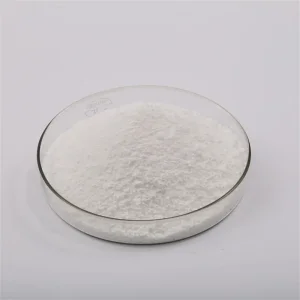
Direct supply from JIMPOCHEM—providing pharmaceutical and cosmetic-grade active ingredients, solubilizers, and stabilizing agents engineered for high-efficacy serum formulations.
A technical analysis of how Azelaic Acid has evolved from a prescription dermatological staple to the cornerstone of clinical B2B redness-relief formulations worldwide.
Erythema, persistent facial redness, and rosacea flare-ups are triggered by elevated level of serine protease Kallikrein 5 (KLK5), which cleaves cathelicidin into the pro-inflammatory peptide LL-37. Azelaic acid directly inhibits KLK5 pathways, curbing vascular hyper-reactivity at the genomic level.
Global cosmetic compliance frameworks now permit 10% to 15% OTC concentrations of Azelaic Acid in serums and micro-emulsions. This shift has catalyzed massive demand among skincare brands seeking clinical proof without the side effects of traditional retinoids or aggressive exfoliants.
The global redness relief serum market is expanding at a CAGR of 8.4% through 2030. Brand owners are turning to specialized Chinese contract manufacturers capable of stabilizing hydrophobic dicarboxylic acids into ultra-lightweight, non-gritty, elegant fluid vehicles.
SEO & Industry Gain Note: Unlike traditional anti-acne agents that rely on harsh keratolytics, Azelaic Acid acts as a multi-functional active—providing selective antimicrobial action against Cutibacterium acnes, inhibiting tyrosinase to clear post-inflammatory hyperpigmentation (PIH), and normalizing epidermal keratinization to restore skin barrier integrity.
The primary barrier to formulating high-efficacy Azelaic Acid Serums is its high melting point (106.5°C) and limited solubility in water and lipids. Chinese OEM innovation has solved crystallization through state-of-the-art micro-emulsion technologies.
| Active Ingredient / Excipient | CAS Number | Formulation Role in Redness Serums | Synergistic Benefit with Azelaic Acid |
|---|---|---|---|
| Tranexamic Acid | 1197-18-8 | Anti-inflammatory & Plasmin Inhibitor | Suppresses plasminogen activator pathways, curbing vasodilation and persistent flushing alongside Azelaic Acid. |
| Squalane | 111-01-3 | Biomimetic Lipid Carrier & Barrier Repair | Restores damaged stratum corneum lipids, counteracting potential dryness or stinging from active acid exfoliation. |
| Ethyl Ascorbic Acid | 86404-04-8 | Etherified Vitamin C Antioxidant | Scavenges reactive oxygen species (ROS), protecting capillaries from oxidative damage while brightening erythema marks. |
| Kojic Acid Dipalmitate | 79725-98-7 | Lipophilic Tyrosinase Inhibitor | Preventative pigment control targeting post-acne redness and melanin overproduction following inflammatory cascades. |
| Isopropyl Myristate | 110-27-0 | Penetration Enhancer & Solvent | Enhances transdermal penetration of Azelaic Acid into deep follicular structures without disrupting epidermal lipid alignment. |
| Glycolic Acid | 79-14-1 | Alpha Hydroxy Acid (AHA) Micro-Exfoliant | Accelerates stratum corneum turnover at micro-concentrations (0.5%-1%), allowing deeper penetration of skin-soothing actives. |
| Ascorbyl Glucoside (AA2G) | 129499-78-1 | Time-Release Vitamin C Derivative | Sustained antioxidant release to prevent UV-induced microvascular dilation and facial flushing throughout the day. |
| Benzethonium Chloride | 121-54-0 | Broad-Spectrum Cationic Antimicrobial | Protects delicate water-in-oil and oil-in-water micro-emulsions against microbial degradation without irritating sensitive skin. |
By utilizing proprietary liquid crystal emulsifiers and non-crystallizing glycol matrices, Chinese chemical suppliers reduce particle size to under 200 nanometers. This ensures rapid absorption, zero grainy texture, and immediate bio-availability upon epidermal application.
Optimal pKa balancing (pH 4.0–4.8) is critical. Maintaining this threshold maximizes the un-ionized form of Azelaic Acid for cellular uptake while maintaining absolute barrier safety, eliminating the burning sensation associated with prescription 20% creams.
Engineered formulas integrate Centella Asiatica, Bisabolol, Dipotassium Glycyrrhizinate, and Hydroxyapatite (CAS 1306-06-5) to buffer the skin barrier, suppress cytokine release (TNF-alpha, IL-6), and instantly diminish visible capillary redness.
Exploring how JIMPOCHEM and leading Chinese chemical manufacturers leverage intelligent infrastructure to deliver unrivaled quality, volume stability, and cost efficiencies to international enterprise clients.
Our Jinan manufacturing headquarters operates fully automated Distributed Control Systems (DCS). Temperature, pressure, dosing speeds, and reaction kinetics for complex active compounds are monitored digitally to guarantee batch-to-batch consistency exceeding 99.8% purity.
From fundamental chemical synthesis of precursors to high-shear micro-emulsification and automated filling lines, China’s industrial ecosystem eliminates intermediate supply chain friction, offering up to 35% cost reduction relative to European or North American producers.
Adhering to strict ESG imperatives, JIMPOCHEM utilizes closed-loop solvent recovery units, zero-VOC emission scrubbers, and biological wastewater processing. We empower downstream beauty brands to meet stringent global sustainability metrics effortlessly.
Enterprise procurement directors require more than high-grade chemicals—they demand seamless global regulatory documentation, rigorous testing, and customized private-label solutions.
Full support for EU CPNP registration, US FDA MoCRA listing, China NMPA filing, full COA, MSDS, REACH registration, and Heavy Metal / Impurity Testing reports for every batch.
Serums undergo 45°C accelerated testing for 90 days, freeze-thaw cycle testing (-10°C to +40°C), photostability assays, and centrifuge stability testing (3000 rpm for 30 mins) to ensure zero phase separation.
Full-spectrum OEM flexibility including airless pump bottles, amber dropper vials, unit-dose ampoules, and custom outer packaging designed to prevent active oxidation and photolytic degradation.
Every single shipment features an encrypted batch QR code allowing brand compliance officers to trace raw material origin, reactor logs, QC test curves, and logistics timestamps instantly.
How global skincare brands, clinical aesthetic practices, and dermatological clinics leverage Chinese Azelaic Acid Serums across diverse commercial product lines.
Formulation: 10% Solubilized Azelaic Acid + 2% Tranexamic Acid + Bisabolol.
Application: Daily morning and evening concentrated drop therapy to calm facial flushing, reduce telangiectasia visibility, and relieve stinging sensations.
Formulation: 5% Micro-Encapsulated Azelaic Acid + Squalane + Hydroxyapatite.
Application: Applied following fractional laser treatment, microneedling, or chemical peels to speed up epithelial repair, suppress erythema rebound, and prevent PIH.
Formulation: 12% Azelaic Acid + 0.5% Glycolic Acid + Zinc PCA.
Application: Target treatment for papulopustular rosacea and inflammatory acne vulgaris. Normalizes follicular keratinization and inhibits acne-causing bacterial proliferation.
Expert insights addressing key chemical, formulation, regulatory, and supply chain queries from international purchasers.
Explore additional high-grade raw materials and functional chemicals supplied by JIMPOCHEM to optimize skin barrier, anti-aging, and daily chemical formulations.
Headquartered in Jinan City Chemical Industry Park, Shandong Province, JIMPOCHEM CO., LTD spans over 500 acres. Integrating R&D, continuous synthesis, and custom micro-emulsification, we empower 5,000+ international cosmetic brands with superior raw materials, stable delivery, and bespoke B2B OEM solutions.
 JIMPOCHEM