Explore our premium grade chemical raw materials manufactured under strict ISO quality control standards for dermatological and active cosmetic applications worldwide.
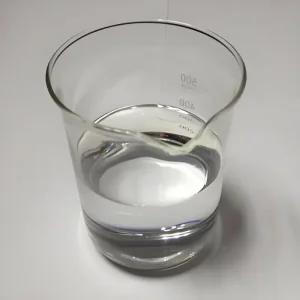
The global demand for high-efficacy cosmetic raw materials and pharmaceutical active ingredients (APIs) has shifted dramatically toward targeted, scientifically validated molecules. Among the most sought-after bio-actives in dermatological treatments are Azelaic Acid (CAS 123-99-9) and Alpha Arbutin (CAS 84380-01-8). Together, these compounds represent the backbone of contemporary hyperpigmentation management, acne vulgaris mitigation, rosacea care, and overall skin-brightening formulation chemistry.
Global cosmetic formulators and contract manufacturing organizations (CMOs) face mounting pressures regarding raw material consistency, trace impurity limits (such as free hydroquinone in arbutin or residual heavy metals in organic acids), and supply chain continuity. This document functions as an technical whitepaper designed to evaluate procurement mechanics, chemical synthesis pathways, quality standards, and synergistic formulation strategies anchored by Chinese production capabilities.
Understanding the molecular behavior and industrial production pathways of Azelaic Acid and Alpha Arbutin is vital for B2B chemists and procurement managers prioritizing batch-to-batch stability and dermatological safety.
Chemical Name: Nonanedioic Acid
Molecular Formula: C9H16O4 | Molecular Weight: 188.22 g/mol
Mechanism of Action: Reversibly inhibits tyrosinase while suppressing mitochondrial oxidoreductase activity in hyperactive melanocytes. Demonstrates anti-inflammatory action by scavenging reactive oxygen species (ROS) and normalizes keratinization within follicular infundibula.
Industrial Synthesis Roadmap: Synthesized via the catalytic oxidative cleavage (ozonolysis or eco-friendly hydrogen peroxide oxidation) of oleic acid derived from vegetable oil feedstocks. Advanced micronization technologies produce ultra-fine particles ($d_{90} < 10\mu m$) to solve historic dissolution and texture grittiness issues in topical emulsions.
Chemical Name: 4-Hydroxyphenyl-$\alpha$-D-glucopyranoside
Molecular Formula: C12H16O7 | Molecular Weight: 272.25 g/mol
Mechanism of Action: Acts as a competitive inhibitor of tyrosinase by binding to the enzyme's catalytic site. Unlike Beta-Arbutin, the $\alpha$-anomer exhibits vastly superior stability, remaining resistant to enzymatic cleavage by skin microflora into hydroquinone.
Industrial Synthesis Roadmap: Produced via microbial transglycosylation (enzymatic glycosylation of hydroquinone using specialized glycosyltransferases derived from non-pathogenic strains). This biotechnological route ensures 100% stereospecificity ($\alpha$-isomer purity $\ge 99.5\%$) with zero detectable residual hydroquinone ($< 10\text{ ppm}$).
| Analytical Parameter | Azelaic Acid (Pharma / High Cosmetic Grade) | Alpha Arbutin (Cosmetic Grade) |
|---|---|---|
| Assay (HPLC / Titration) | $\ge 99.0\%$ (HPLC / Acid-Base Titration) | $\ge 99.0\%$ (HPLC Peak Area) |
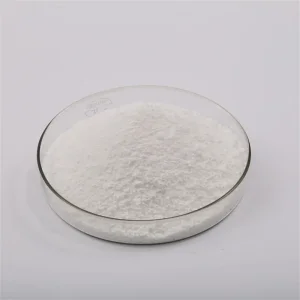
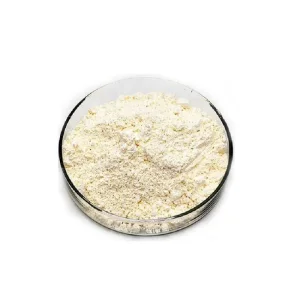
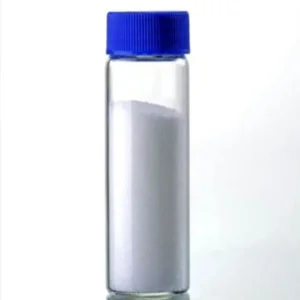
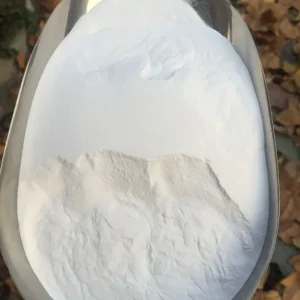
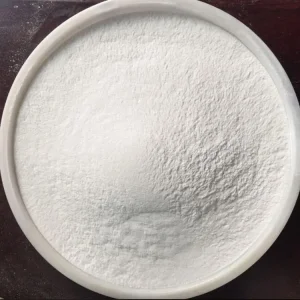
| Appearance | White to Off-White Crystalline Powder | White Crystalline Powder |
| Melting Point | 106.0°C – 110.0°C | 203.0°C – 207.0°C |
| Specific Optical Rotation $[\alpha]_D^{20}$ | N/A | $+175.0^\circ \text{ to } +185.0^\circ$ (Sol: $1\text{g}/10\text{mL } H_2O$) |
| Heavy Metals (as Pb) | $\le 10 \text{ ppm}$ | $\le 10 \text{ ppm}$ |
| Free Hydroquinone Limit | N/A | $\le 10 \text{ ppm}$ (Strict Gas Chromatography / HPLC) |
| Loss on Drying | $\le 0.5\%$ | $\le 0.5\%$ |
Contemporary skincare formulations rarely rely on single active ingredients. Global B2B buyers—ranging from Indie Skincare Brands to multinational pharmaceutical conglomerates—are demanding bio-compatible multi-active complexes that target melanogenesis across multiple metabolic pathways.
Combining Alpha Arbutin with stable Vitamin C derivatives like Ascorbyl Glucoside (AA2G) or lipid-soluble Ascorbyl Tetraisopalmitate inhibits pre-tyrosinase synthesis and directly chelates copper ions at the active enzyme site, resulting in up to 3x higher efficacy than monotherapy.
Pairing Azelaic Acid with lipid-soluble brightening agents such as Kojic Acid Dipalmitate mitigates post-acne scarring. Azelaic acid calms the inflammatory cascade while Kojic Acid Dipalmitate prevents melanocyte hyperactivity.
Supply chains must comply with regional thresholds: The European SCCS limits Alpha Arbutin to 2% in face creams, while Azelaic Acid is OTC up to 10% in cosmetics or prescription-grade from 15% to 20%. Chinese manufacturing ensures batch conformance to REACH, FDA, and EU micro-impurity laws.
Established in 2010 and strategically headquartered within the state-level Chemical Industry Park of Jinan City, Shandong Province, JIMPOCHEM CO., LTD spans over 500 acres of advanced chemical processing facilities. We are a recognized premier chemical raw material manufacturer integrating world-class R&D, synthetic chemistry scaling, global export operations, and technical customer service solutions.
Our core focus centers on high-end fine chemicals, pharmaceutical intermediates, and specialized cosmetic raw materials. Operating under stringent ISO quality management and environmental systems, JIMPOCHEM is committed to providing fully traceable chemical products backed by comprehensive technical documentation (COA, HPLC, MSDS, TDS, IR Spectra).
With an elite chemical engineering team averaging over 10 years of industrial experience, JIMPOCHEM serves as a trusted Designated Chemical Service Provider for more than 5,000 international enterprises across Europe, the Americas, Southeast Asia, the Middle East, and Oceania.
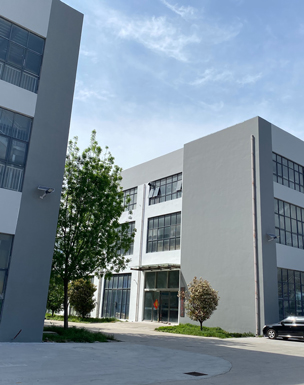

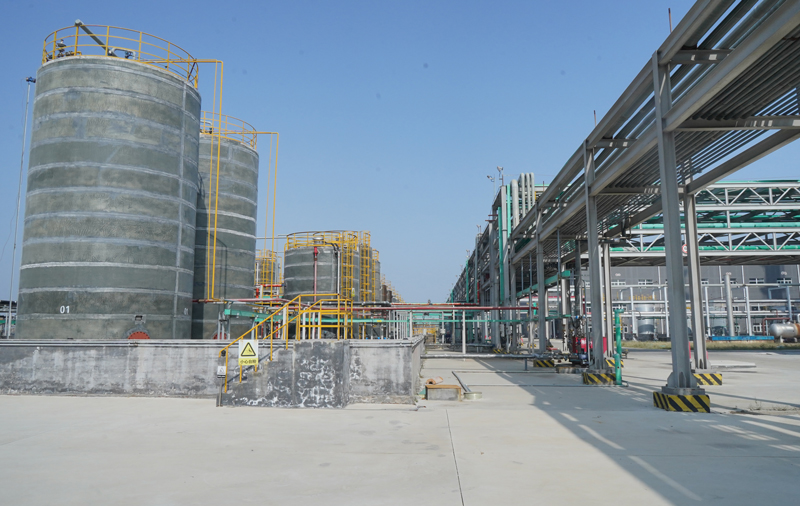
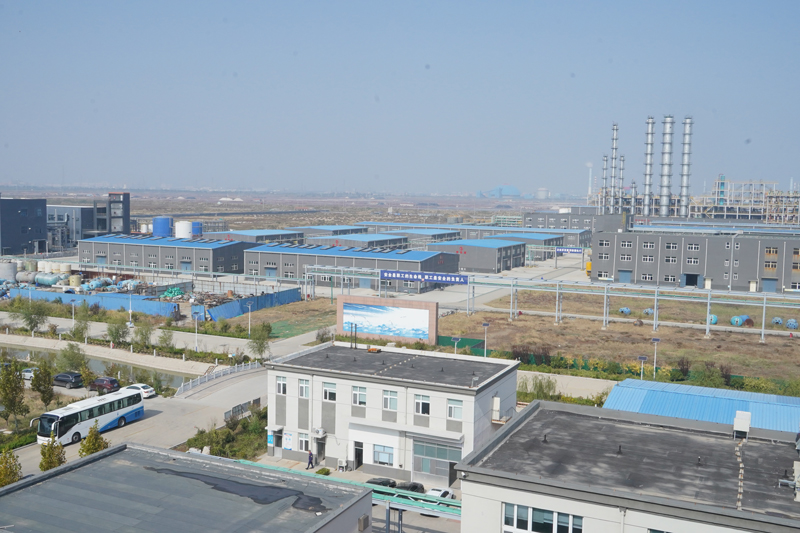
By controlling raw material channels and operating automated, digitally managed reactor trains, we balance high-tonnage batch production with flexible custom syntheses, accommodating urgent volume requests smoothly.
Quality is our core lifeline. From incoming reagent verification to in-line reaction monitoring and final lot release testing via HPLC, GC-MS, and ICP-MS, every batch is tied to a permanent digital traceability record.
In response to global "dual-carbon" sustainability directives, our plant utilizes catalytic continuous-flow processes, closed-loop solvent recovery systems, and compliant effluent treatment to minimize ecological footprints.
Beyond specialized dermatological ingredients like Azelaic Acid and Alpha Arbutin, JIMPOCHEM offers tailored solution packages across diverse global manufacturing sectors:
Active ingredients, emulsifiers, hair conditioning agents, and UV filters. Key items include PPG-20 Methyl Glucose Ether, Lauryl Hydroxysultaine, Sodium Phytate, and high-efficiency UV absorber Bemotrizinol.
Active pharmaceutical ingredients (APIs), biological buffers, and diagnostic intermediates. Key supplies include high-purity Tris Base, Glutathione (Reduced), Sodium Pyruvate, and antiseptic O-Phthalaldehyde.
Precision cleaning solvents, battery electrolytes, and high-tech fluoro-chemicals including Lithium Bis(trifluoromethanesulfonyl)imide (LiTFSI) and thermal fluid Methyl Perfluoroisobutyl Ether (HFE-7100).
Importing active ingredients from China requires robust regulatory alignment and flawless logistics documentation. JIMPOCHEM streamlines international trade through an integrated client support framework:
We provide full technical documentation packages including DMF files, ISO 9001/14001 certificates, REACH registration dossiers, Allergen Statements, non-GMO certificates, and BSE/TSE-free declarations.
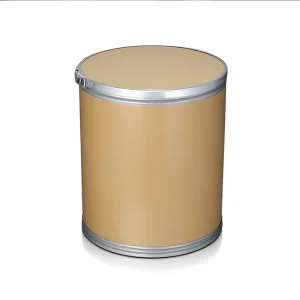
Standard packaging includes 1kg aluminum foil bags, 25kg fiber drums with double PE inner liners, or specialized nitrogen-flushed packaging for oxygen-sensitive active ingredients to ensure extended shelf life.
For heat-sensitive active compounds or specific bio-enzymatic products, we offer temperature-controlled air freight solutions (2°C–8°C or dry ice shipping) complete with real-time temperature data loggers.
Our dedicated regulatory and chemical engineering representatives provide fast technical inquiry turnarounds, assistance with product formulation troubleshooting, and sample dispatch within 48 hours.
Alpha Arbutin offers approximately 9 to 10 times greater skin-brightening efficacy than Beta Arbutin. The $\alpha$-glycosidic linkage exhibits dramatically higher enzymatic stability, ensuring it does not hydrolyze into free hydroquinone under varying pH or light exposure. This renders Alpha Arbutin significantly safer and fully compliant with EU SCCS and US FDA cosmetics regulations.
Azelaic Acid has low water solubility and limited oil solubility, which historically caused grittiness in topical creams. JIMPOCHEM solves this through advanced physical micronization, achieving a particle distribution profile of $d_{90} < 10\mu m$. Additionally, our application laboratory provides formulators with specific solubilization protocols utilizing specialized polyols (such as Ethoxydiglycol or 3-Methoxy-3-Methyl-1-Butanol) to achieve silky, non-gritty textures.
Alpha Arbutin is most stable in a pH window of 3.5 to 6.5. Formulations dropping below pH 3.5 run the risk of breaking the glycosidic bond. Azelaic acid formulations perform optimally at pH 4.0 to 5.5 to maintain a balance between active non-ionized acid skin penetration and dermatological tolerance.
We utilize an exclusive biotransformation process driven by specific glycosyltransferase enzymes rather than traditional harsh chemical synthesis. Every commercial batch undergoes high-performance liquid chromatography (HPLC) testing with photodiode array (PDA) detection to confirm residual hydroquinone is strictly under 10 ppm, far exceeding international cosmetic safety benchmarks.
Standard trial MOQs start at 1kg for high-value active ingredients, while commercial bulk orders are typically fulfilled in 25kg fiber drums. Free evaluation samples (50g to 100g) are available for verified commercial formulators upon request through our sales engineering department.
Discover our extended portfolio of fine chemicals, specialty solvents, and active skincare ingredients available for worldwide export.
 JIMPOCHEM