Explore our high-purity chemical raw materials certified for international industrial applications.
A authoritative analysis of physicochemical parameters, structural stability, and mechanism of action in eco-friendly polymer stabilization systems.
Calcium Acetylacetonate (CAS 19372-44-2), also known as Calcium 2,4-pentanedionate or Calcium bis(acetylacetonate), is a coordination complex composed of a central divalent calcium cation bound to two acetylacetonate chelate ligands. Represented chemically as $\text{Ca(C}_5\text{H}_7\text{O}_2)_2$ (or $\text{C}_{10}\text{H}_{14}\text{CaO}_4$), this compound functions as an essential, non-toxic, halogen-free thermal stabilizer, catalyst, and crosslinking promoter across high-performance polyolefin, resin, and coating formulations.
Unlike traditional heavy-metal stabilizers (such as toxic lead, cadmium, or hazardous organotin compounds), Calcium Acetylacetonate provides superior thermal resistance, initial color retention, and UV stability without compromising human health or environmental safety. Its high thermal decomposition point (>280°C) allows for high-temperature extrusion and complex polymer processing.
In Polyvinyl Chloride (PVC) matrix processing, thermal degradation primarily manifests via autocatalytic dehydrochlorination—where labile allylic chlorine atoms initiate chain degradation, releasing toxic $\text{HCl}$ gas and forming conjugated polyene sequences that cause severe discoloration (yellowing to blackening) and structural embrittlement.
CAS 19372-44-2 acts as an exceptionally potent labile chlorine scavenger and hydrochloric acid neutralizing agent. The diketone ligand selectively substitutes labile chlorine atoms on the PVC backbone, terminating the zip-like elimination process. When co-formulated with Zinc Acetylacetonate or Stearoylbenzoyl Methane (SBM/DBM), Calcium Acetylacetonate suppresses "zinc burning" (sudden degradation caused by $\text{ZnCl}_2$ Lewis acid accumulation) by undergoing ligand exchange to regenerate active zinc complexes, creating a stable, long-lasting protective matrix.
| Chemical Parameter | Standard Specification (Industrial Grade) | High-Purity Polymer Grade | Testing Methodology |
|---|---|---|---|
| CAS Registry Number | 19372-44-2 | 19372-44-2 | EINECS: 243-001-3 |
| Chemical Formula | $\text{C}_{10}\text{H}_{14}\text{CaO}_4$ | $\text{C}_{10}\text{H}_{14}\text{CaO}_4 \cdot x\text{H}_2\text{O}$ | Molecular Weight: 238.29 g/mol |
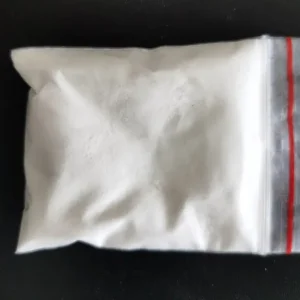
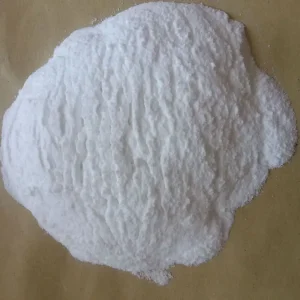
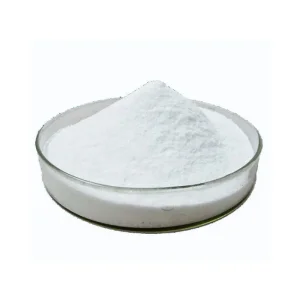
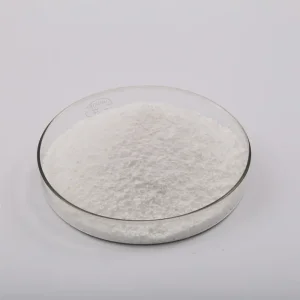
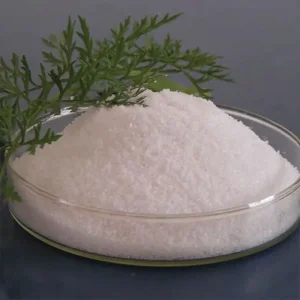
| Appearance | White to Off-White Fine Powder | Pure White Micronized Powder | Visual Inspection |
| Assay (Purity) | $\ge 98.5\%$ | $\ge 99.5\%$ | Complexometric Titration / HPLC |
| Calcium ($\text{Ca}^{2+}$) Content | 16.2% – 17.2% | 16.5% – 17.0% | Atomic Absorption Spectroscopy (AAS) |
| Melting / Decomposition Point | > 275 °C (Decomposes) | > 285 °C (Decomposes) | Differential Scanning Calorimetry (DSC) |
| Loss on Drying ($\text{H}_2\text{O}$) | $\le 1.5\%$ | $\le 0.5\%$ | Thermogravimetric Analysis (TGA) |
| Free Acetylacetone | $\le 0.5\%$ | $\le 0.1\%$ | Gas Chromatography (GC-FID) |
| Heavy Metal Contaminants ($\text{Pb}, \text{Cd}$) | $\le 10\text{ ppm}$ | $\le 2\text{ ppm}$ (RoHS/REACH Compliant) | ICP-MS spectrometry |
| Average Particle Size ($\text{D}_{50}$) | 10 – 15 $\mu\text{m}$ | 3 – 5 $\mu\text{m}$ (Micronized) | Laser Diffraction Particle Analyzer |
Macroeconomic analysis of regulatory pressure, transition to eco-friendly thermal stabilizers, and market growth drivers.
Global regulatory bodies—including the European Chemicals Agency (ECHA) under REACH, the US EPA, and China’s "Dual-Carbon" green manufacturing directives—have accelerated the phase-out of lead-based ($\text{Pb}$) and organotin stabilizers. Calcium Acetylacetonate serves as the primary non-toxic replacement, driving a compound annual growth rate (CAGR) of over 7.8% in the non-toxic PVC additives sector.
High-performance CPVC and rigid PVC applications—such as eco-friendly window profiles, potable water piping systems, and flame-retardant cable conduits—require heat stabilizers that offer high thermal endurance without leaching hazardous ions. Demand for CAS 19372-44-2 in rigid extrusion applications has increased by 42% in North America and Asia-Pacific.
Europe: Driven by stringent medical-grade PVC and food-contact packaging safety standards.
Asia-Pacific: World's largest manufacturing hub for PVC pipes, synthetic leather, and automotive interiors requiring low-VOC emissions.
Americas: Rapidly adopting $\text{Ca/Zn}$ acetylacetonate systems for automotive wiring harnesses.
Because Calcium Acetylacetonate is moisture-sensitive during high-temperature polymer processing, controlling hydration states, trace free-diketone residuals, and particle size distribution ($\text{D}_{50}$) is critical. Purchasing directly from qualified chemical synthesis manufacturers like JIMPOCHEM CO., LTD guarantees batch-to-batch consistency, low moisture retention ($\le 0.5\%$), zero heavy-metal cross-contamination, and direct supply chain security.
Customized chemical implementation blueprints tailored to diverse industrial environments.
Scenario: Rigid PVC Extrusion (Pipes, Profiles, Foamed Boards) & Soft Calendering (Films, Medical Tubing, Automotive Leather).
Role: Functions as the primary organic heat stabilizer in Calcium-Zinc ($\text{Ca/Zn}$) solid complex systems. It prevents early discoloration during processing at 180°C–210°C, reduces plate-out on metal dies, and delivers excellent transparency in clear PVC formulations.
Scenario: Polyurethane (PU) Foam, Epoxy Resins, Acrylic Monomer Synthesis, Polyolefin Synthesis.
Role: Calcium Acetylacetonate acts as a mild, environmentally benign metal catalyst for esterification, transesterification, and polyaddition reactions. It accelerates curing times without causing thermal degradation or discoloration of the resin matrix.
Scenario: High-Performance Industrial Paints, Anti-Corrosion Coatings, Specialty Inks, Adhesives.
Role: The chelated metal complex promotes crosslinking between hydroxyl, carboxyl, or amino functional groups in acrylic and alkyd resin backbones. This improves solvent resistance, scratch hardness, adhesion to metallic substrates, and weatherability.
Scenario: Halogenated Rubber, EPDM Compounds, Silicone Rubbers, Tire Components.
Role: Acts as a secondary accelerator and scorch safety regulator. It ensures uniform cross-link density, retards premature vulcanization under shear heat, and enhances the mechanical tensile strength and oil resistance of cured elastomers.
Scenario: Architectural Glass Coating, Ceramic Glazing, Pyrolytic Metal Oxide Film Deposition.
Role: Used as a precursor material for chemical vapor deposition (CVD) or sol-gel processing to deposit thin, optically uniform calcium oxide ($\text{CaO}$) or composite thin films that improve surface durability, infrared reflection, and anti-reflective properties.
Scenario: Precursor for Advanced Perovskites, Solid State Battery Electrolyte Additives.
Role: Offers high-solubility organic coordination pathways to introduce high-purity calcium ions into complex metal-oxide structures, electro-ceramic powders, and catalytic substrates for energy conversion devices.
Inside JIMPOCHEM’s automated production line, quality engineering, and future green chemical synthesis milestones.
JIMPOCHEM utilizes a proprietary, low-carbon aqueous-phase synthesis technique to manufacture premium Calcium Acetylacetonate (CAS 19372-44-2). High-purity Acetylacetone (2,4-pentanedione) is reacted with ultra-pure Calcium Hydroxide ($\text{Ca(OH)}_2$) or activated Calcium Oxide ($\text{CaO}$) under strictly controlled temperature and pH conditions:
Combining world-class manufacturing scale, strict quality oversight, and green chemical engineering.
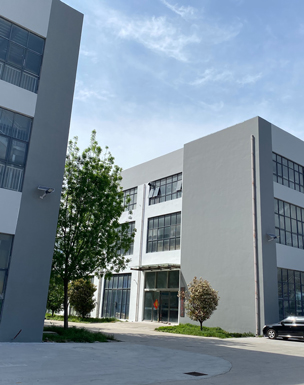
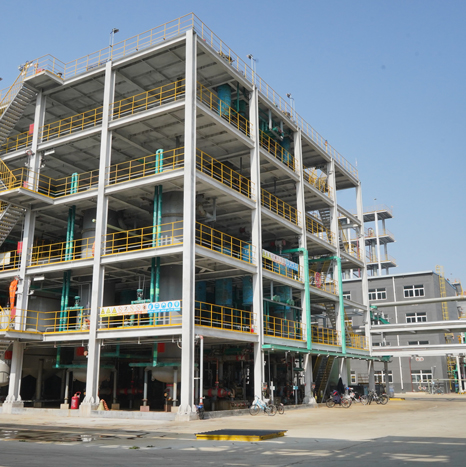
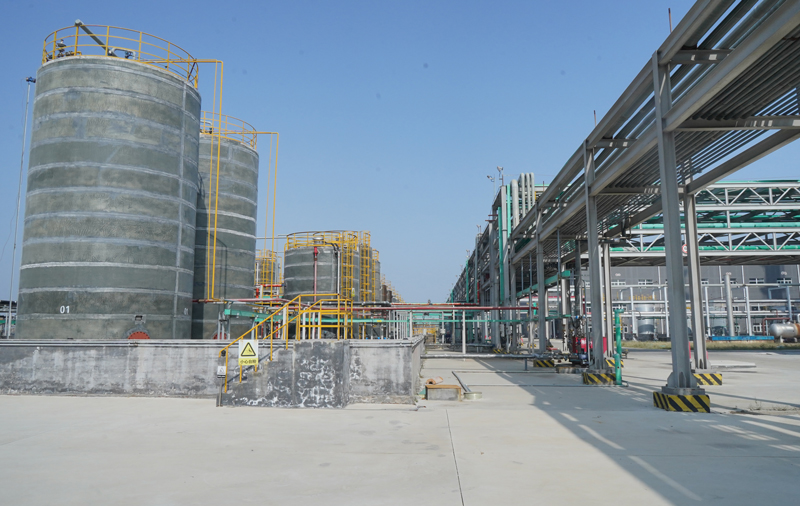
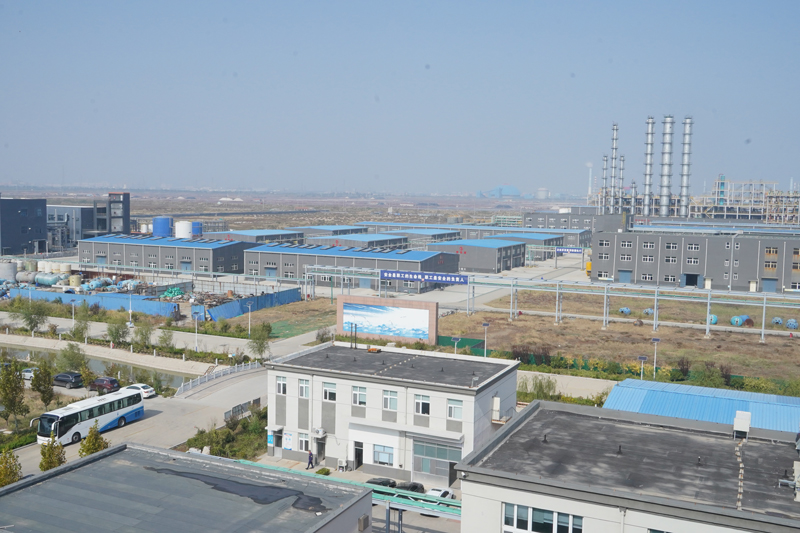
JIMPOCHEM CO., LTD was established in 2010 and is headquartered in the State-Level Chemical Industry Park of Jinan City, Shandong Province. Covering an expansive industrial footprint of over 500 acres, JIMPOCHEM is a premier chemical raw material manufacturer integrating advanced R&D, continuous industrial production, global supply logistics, and dedicated technical support services.
Our core product portfolio focuses on high-end fine chemicals, eco-friendly polymer additives, pharmaceutical intermediates, and cosmetic raw materials. Backed by 16 years of chemical manufacturing excellence, JIMPOCHEM has earned ISO9001 Quality Management System, ISO14001 Environmental Management System, and ISO45001 Occupational Health & Safety certifications.
Our expert technical team consists of senior chemical engineers with over a decade of hands-on industry experience. We offer one-stop chemical solutions tailored to international client specifications—ranging from custom synthetic scaling, formula optimization, and custom mesh sizing to comprehensive supply chain risk management.
Fully certified manufacturing & quality control systems.
Every consignment tracked from raw materials to final shipment testing.
Direct answers from our senior chemical research engineers regarding technical performance, ordering, and compliance.
Browse our verified chemical building blocks, pharmaceutical intermediates, and specialized additives.
 JIMPOCHEM