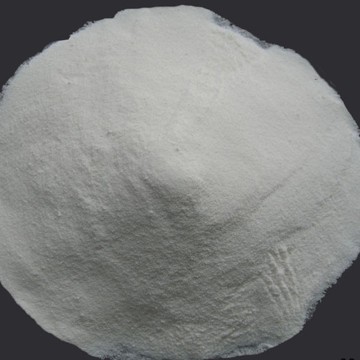
Top-grade chemical raw materials engineered for precision, industrial stability, and high performance.
Understanding the molecular architecture, ligand coordination chemistry, and core physical specifications of Calcium Acetylacetonate (CAS 19372-44-2).
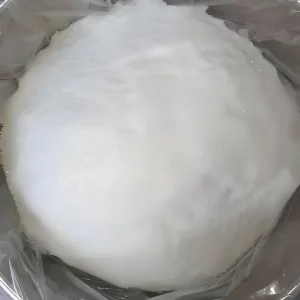
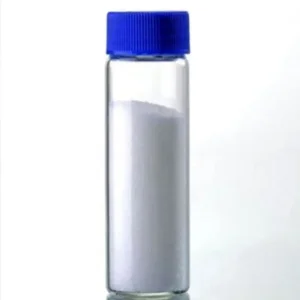
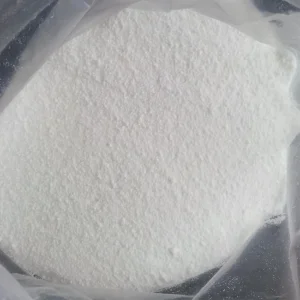
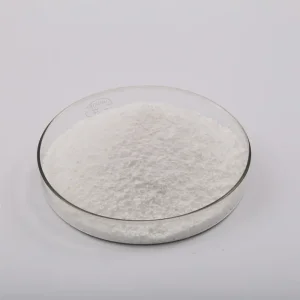
Calcium 2,4-pentanedionate, commonly referred to as Calcium Acetylacetonate, is a chelate complex formed by the binding of calcium ions ($Ca^{2+}$) to two acetylacetonate enolate ligands. Its molecular formula is $C_{10}H_{14}CaO_4$, with a molecular weight of 238.29 g/mol. The symmetrical coordination geometry delivers exceptional thermal stability and hydrophobic properties compared to conventional organic calcium salts.
Functions primarily as an eco-friendly heat stabilizer and halogen scavenger in halogenated polymers such as PVC. Additionally, it serves as a highly efficient crosslinking catalyst for polyurethane, epoxy resins, and acrylic adhesives. Its unique ligand exchange chemistry enables rapid neutralization of labile chlorine atoms, preventing premature polymer degradation during high-shear processing.
Commercial grade target specs: High Purity Assay ($\ge 99.0\%$), Calcium Content ($16.5\% - 17.2\%$), Low Moisture ($\le 1.0\%$), and Fine Particle Size (99% passing through 325 mesh). Strict control over trace heavy metals ($Pb \le 5\text{ ppm}, Cd \le 1\text{ ppm}$) is mandatory to comply with international REACH and RoHS directives.
Calcium Acetylacetonate (Ca(acac)₂) exhibits superior initial color holding and transparency over traditional metal soaps. Below is an empirical performance analysis across key polymer matrix parameters:
| Stabilizer Type | Initial Color Hold | Long-Term Heat Stability | Plate-Out Propensity | Toxicity & Environmental Profile | Clarity / Transparency Impact |
|---|---|---|---|---|---|
| Calcium Acetylacetonate (Ca(acac)₂) | Exceptional | High (Synergistic with Zn) | Extremely Low | Non-toxic / Heavy-metal free | High Transparency |
| Lead-Based Stabilizers (Tribasic) | Moderate | Very High | Moderate | Highly Toxic (Restricted) | Opaque / Hazy |
| Calcium-Zinc Stearates (Conventional) | Poor (Prone to Early Yellowing) | Moderate | High (Migration Risk) | Eco-Friendly | Translucent / White |
| Organotin Compounds | Excellent | Very High | Low | Moderate-High Toxicity | Very High Transparency |
The global chemical shift towards eco-friendly, non-toxic additives is accelerating the adoption of organometallic beta-diketone chelates.
With stringent global regulations such as Europe's REACH, RoHS 3, and US EPA directives phasing out lead, cadmium, and organotin stabilizers in consumer products, manufacturers are transitioning to Calcium-Zinc (Ca/Zn) complex systems. Calcium 2,4-pentanedionate serves as the pivotal organic co-stabilizer in these formulations, replacing toxic heavy metals while guaranteeing high thermal resistance during extrusion.
Automotive interiors (dashboard skins, door panels) and medical-grade PVC tubing demand low VOC emissions, zero odor, and high clarity. Standard calcium stearates cause fogging and plate-out on molds. High-purity Calcium Acetylacetonate manufactured by Jinan-based facilities meets strict fogging limits, driving heavy demand across European and North American tier-1 automotive suppliers.
Beyond vinyl polymers, Calcium 2,4-pentanedionate is establishing strong market share as a non-toxic curing catalyst in polyurethane formulations, powder coatings, and silane-terminated polyether sealants. Its ability to catalyze condensation reactions without the ecotoxicity associated with dibutyltin dilaurate (DBTDL) makes it an essential raw material for sustainable green building formulations.
How Calcium Acetylacetonate mitigates dehydrochlorination and prevents 'Zinc Burning' in modern polymer compounding.
PVC degradation under thermal stress initiates at allylic chlorine sites, producing conjugated polyene sequences that cause discoloration (yellow to brown to black) and loss of mechanical integrity. Calcium 2,4-pentanedionate acts through a dual-action mechanism:
Ca(acac)₂ + Zn(acac)₂ + Dibenzoylmethane (DBM)
Designed for ultra-clear PVC sheets and medical tubing. Delivers initial color neutrality up to 200°C with processing cycles exceeding 45 minutes without yellowing.
Ca(acac)₂ + Epoxidized Soybean Oil (ESO) + Hydrotalcite
Engineered for high-temperature wire and cable insulation (UL 105°C rated). Suppresses dielectric losses and enhances long-term heat aging resistance in flexible PVC compounds.
Acts as a latent catalyst in 2K polyurethane systems. Offers extended pot life at room temperature while accelerating thermal curing at elevated temperatures (80°C - 120°C).
About JIMPOCHEM CO., LTD — A global leader in fine chemical synthesis and custom formulation solutions.
JIMPOCHEM CO., LTD was established in 2010 and is headquartered in the prestigious Chemical Industry Park of Jinan City, Shandong Province. Spanning an impressive facility footprint of over 500 acres, JIMPOCHEM is an integrated high-tech chemical manufacturer combining advanced laboratory R&D, industrial-scale synthesis, worldwide sales, and specialized application engineering services.
With over 16 years of chemical manufacturing expertise, our core operations specialize in high-end fine chemicals, organometallic complexes, cosmetic raw materials, and eco-friendly polymer additives. We operate under stringent global quality metrics, backed by ISO 9001 Quality System Certification and ISO 14001 Environmental Management System Certification.
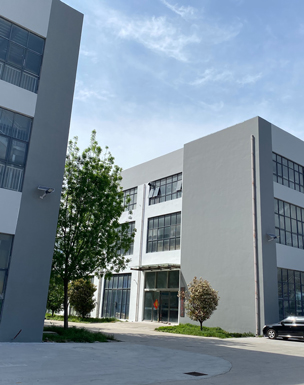
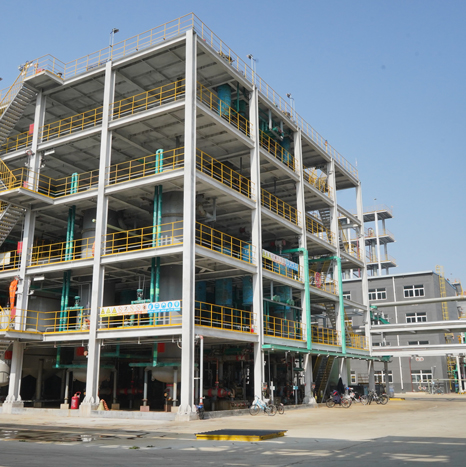
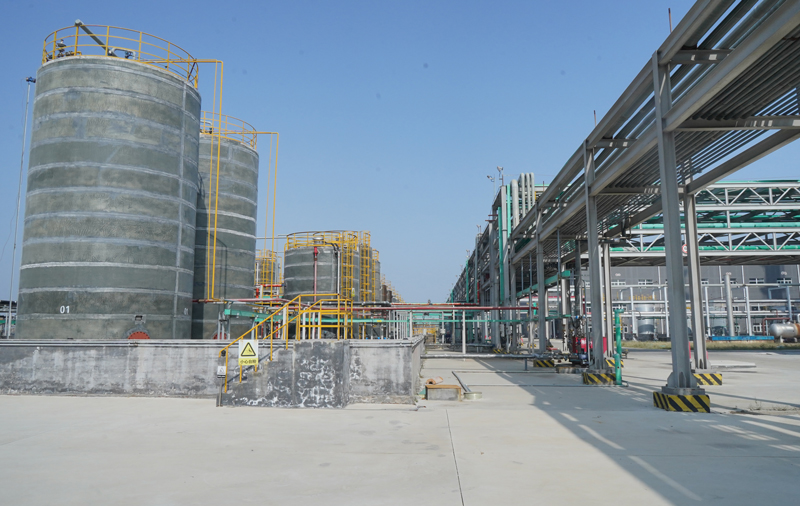
Rigorous analytical chemistry protocol ensuring batch-to-batch consistency and complete traceability from raw materials to delivered cargo.
Every lot of Calcium 2,4-pentanedionate undergoes rigorous testing utilizing High-Performance Liquid Chromatography (HPLC), Atomic Absorption Spectroscopy (AAS) for calcium assay and heavy metals, Karl Fischer titrators for micro-moisture verification, and particle size analyzers (Laser Diffraction).
Our digital ERP manufacturing workflow generates a unique digital footprint for every batch. Customers can trace raw material origin, synthesis reaction parameters, quality inspection reports (COA), and logistics telemetry directly using our batch identification portal.
Calcium Acetylacetonate is hygroscopic. We supply product in multi-layer 25kg aluminum foil-lined Kraft paper bags or 500kg moisture-proof bulk bags with pallet nitrogen-flushing options. Dedicated logistics hubs near major ports ensure prompt ocean freight and air cargo dispatch.
Pioneering the next era of bio-based precursors and high-purity nanostructured organometallic chelates.
JIMPOCHEM R&D is currently commercializing synthesis routes using bio-derived acetylacetone obtained from renewable agricultural biomass. This initiative will reduce the Scope 3 carbon footprint of Calcium Acetylacetonate by over 40% by late 2026.
Developing sub-micron and nano-dispersed Calcium Acetylacetonate powders specifically tailored for optical-grade polycarbonate, ultra-thin PVC medical films, and advanced lithium battery electrolyte additive applications.
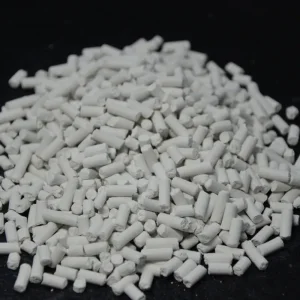
Engineered dust-free, non-dusting prill and granule formulations containing pre-blended Calcium 2,4-pentanedionate, Zinc co-stabilizers, and antioxidants, eliminating compounding workplace dust hazards for international buyers.
Answers to critical questions asked by procurement managers, chemical engineers, and formulation specialists.
Explore our broader portfolio of premium synthetic intermediates, cosmetic active ingredients, and industrial catalysts.
 JIMPOCHEM