Explore our high-purity enterprise chemical catalog engineered for global dermatological, pharmaceutical, and high-performance industrial applications.
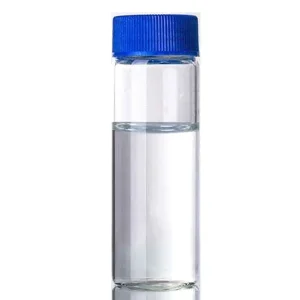
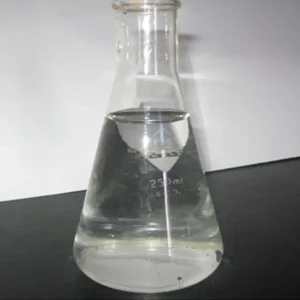
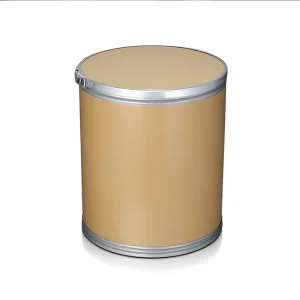
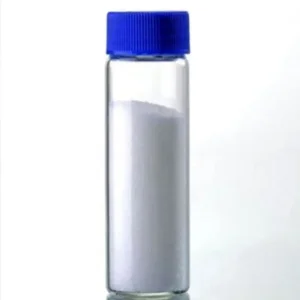
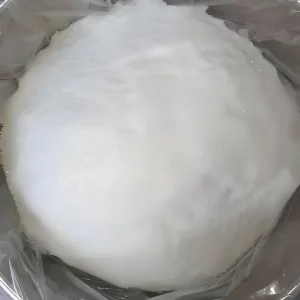
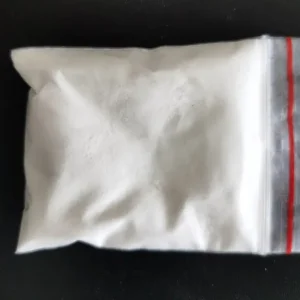
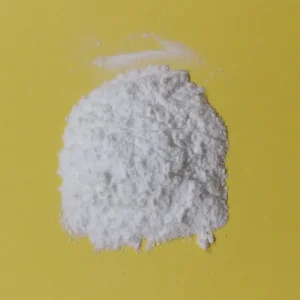
Azelaic acid (systematic IUPAC name: Nonanedioic acid, CAS Registry Number: 123-99-9) represents a paramount naturally occurring saturated dicarboxylic acid containing a nine-carbon straight chain. Characterized by its unique molecular geometry—comprising terminal carboxyl groups located at both ends of a hydrophobic hydrocarbon chain—Azelaic Acid exhibits dual thermodynamic solubility profiles and exceptional biochemical multi-functionality.
As a trusted international manufacturer and chemical supplier, JIMPOCHEM CO., LTD leverages advanced chemical synthesis technologies, intelligent DCS control systems, and strict analytical quality controls to yield ultra-pure Azelaic Acid active ingredients exceeding 99.5% purity. Whether integrated into advanced prescription dermatological creams, over-the-counter anti-acne formulations, hyperpigmentation-correcting serums, or high-performance industrial polymers, our output delivers unmatched batch-to-batch consistency and global compliance (REACH, US FDA DMF, ISO 9001, ISO 14001).
| Property / Parameter | Technical Specification Standard | Analytical Method / Protocol |
|---|---|---|
| Chemical Name | Azelaic Acid / Nonanedioic Acid / 1,7-Heptanedicarboxylic acid | IUPAC Nomenclature Standard |
| Molecular Formula | C₉H₁₆O₄ | High-Resolution Mass Spectrometry |
| CAS Registry Number | 123-99-9 | Chemical Abstracts Service Identification |
| Molecular Weight | 188.22 g/mol | Calculated Stoichiometry |
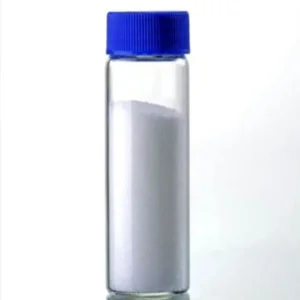
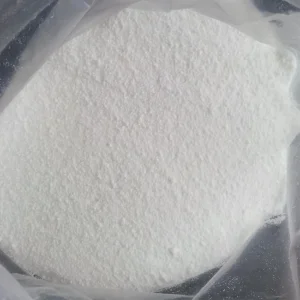
| Appearance | White to off-white crystalline powder / fine micro-flakes | Visual / Sensory Inspection |
| Assay / Chemical Purity | ≥ 99.5% (Pharma & Cosmeceutical Grade) | HPLC / GC-FID Analysis |
| Melting Point Range | 109.0 °C – 111.0 °C | Capillary Melting Point Apparatus |
| Water Solubility | 2.4 g/L at 20 °C (Soluble in hot water, ethanol, and glycol) | Gravimetric / Turbidimetric Test |
| Heavy Metals (as Pb) | ≤ 10 ppm max | ICP-MS (Inductively Coupled Plasma) |
| Residue on Ignition | ≤ 0.1% max | Thermogravimetric Furnace |
Historically, the production of nonanedioic acid relied on the oxidative cleavage of unsaturated fatty acids derived from natural lipids. Today, JIMPOCHEM’s synthetic technology pathways combine classical precision organic synthesis with modern green chemistry metrics to optimize operational yield, eliminate heavy metal catalysts, and minimize environmental impact.
The primary traditional route involves continuous ozonolysis of oleic acid ($C_{18}H_{34}O_2$). Cleavage of the carbon-carbon double bond at position C-9 yields pelargonic acid (nonanoic acid) as a co-product alongside Azelaic Acid ($C_9H_{16}O_4$). Subsequent fractional crystallization processes ensure ultra-high purity levels suitable for sensitive dermal topical applications.
To eliminate safety challenges connected to industrial ozone generation, modern facilities implement hydrogen peroxide ($H_2O_2$) catalytic oxidation utilizing tungsten- or cobalt-based heterogeneous catalysts. This green synthesis route yields high selectivity toward 1,9-nonanedioic acid while maintaining carbon neutral emissions and minimal halogenated toxic byproducts.
Driven by eco-conscious brand demands, bio-based Azelaic Acid synthesized via engineered yeast strains (*Malassezia furfur* or modified *Candida tropicalis*) utilizing plant-derived alkane substrates represents a rapidly growing industrial frontier. JIMPOCHEM’s R&D department is at the forefront of scaling up biological fermentation methodologies for renewable cosmetics.
Azelaic Acid operates through multifaceted biological pathways. It acts as a competitive inhibitor of 5-alpha-reductase, inhibiting the conversion of testosterone to dihydrotestosterone (DHT) in sebaceous glands. Furthermore, it exerts potent tyrosinase inhibition, preventing hyperactive melanogenesis without altering normal melanin production in healthy keratinocytes—making it a clinically proven gold standard for treating post-inflammatory hyperpigmentation, melasma, and acne vulgaris.
The international demand for Azelaic Acid ($C_9H_{16}O_4$) is experiencing exponential compound annual growth (CAGR > 7.2%), propelled by its dual adoption in cosmetic science and advanced material chemistry.
Modern consumers increasingly prefer multi-functional active ingredients over harsh exfoliant acids. Azelaic Acid offers anti-comedogenic, anti-inflammatory, antioxidant, and skin-brightening properties within a single stable molecule. From 10% OTC serums to 15-20% prescription gel vehicles, formulators globally rely on high-purity micronized grades to optimize skin permeability.
Beyond dermatological applications, Azelaic Acid is a critical chemical precursor for synthesizing Polyamide 69 (Nylon 69), specialty plasticizers, bio-degradable polyester resins, and synthetic lubricants. Its nine-carbon straight chain imparts superior flexibility, thermal stability, and moisture resistance to high-grade engineering polymers.
North American and European formulators demand stringent compliance including REACH registration, US FDA Drug Master Files (DMF), non-GMO documentation, and zero micro-plastic contamination. Concurrently, Asia-Pacific and Latin American markets exhibit surging procurement volumes driven by expanding personal care manufacturing hubs.
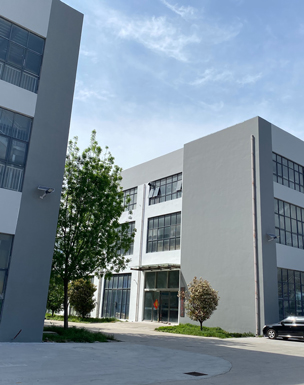
Headquartered in the Chemical Industry Park of Jinan City, Shandong Province, JIMPOCHEM CO., LTD operates across a sprawling 500-acre modern production base equipped with automated digital control systems (DCS/PLC). Our Industry 4.0 infrastructure mitigates global supply chain fragility through strategic advantages:
Optimizing Azelaic Acid incorporation requires technical expertise regarding pH stability, solubilization, and dispersion control.
Optimal pH Range: 4.0 – 5.5
Recommended Dosage: 5.0% – 15.0%
Technical Note: Due to its crystalline nature, micronized Azelaic Acid (D90 < 10 μm) is recommended to prevent grainy texture. Combining with polyols (e.g., Propylene Glycol, Solketal) enhances dermal penetration without recrystallization.
Optimal pH Range: 4.5 – 5.0
Recommended Dosage: 15.0% – 20.0%
Technical Note: Formulating topical prescription therapies requires high-shear homogenization under nitrogen blanketing to ensure thermodynamic stability, uniform active dispersion, and zero degradation of lipid matrices.
Purity Standard: ≥ 99.8% Technical Grade
Reaction Type: Polycondensation / Esterification
Technical Note: Serves as a versatile dicarboxylic monomer reacting with diamines or diols. Low moisture levels (<0.2%) prevent premature termination of polymer chains during condensation reactions.
Established in 2010 and headquartered in the prestigious Chemical Industry Park of Jinan City, Shandong Province, JIMPOCHEM CO., LTD spans over 500 acres of high-tech chemical manufacturing infrastructure. As an integrated research, development, production, and international trade enterprise, we focus on high-end fine chemicals, active pharmaceutical ingredients (APIs), and cosmetic raw materials.
Backed by a senior core engineering team with over 16 years of chemical industry expertise, JIMPOCHEM provides custom synthesis, formulation optimization, and full-spectrum supply chain solutions. Our products are exported to more than 200 countries across North America, Europe, Asia-Pacific, the Middle East, and Oceania, earning the trust of over 5,000 global corporate partners.
Technical and commercial clarity for procurement specialists, formulation scientists, and regulatory officers.
Discover complementary fine chemicals, active pharmaceutical ingredients, and specialty solvents produced under strict international quality benchmarks.
 JIMPOCHEM