Explore our premium grade functional ingredients and specialized fine chemicals manufactured under strict ISO quality standards.
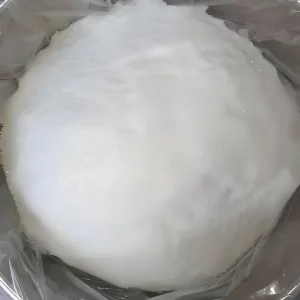
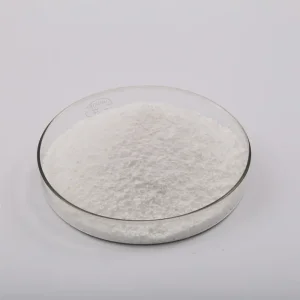
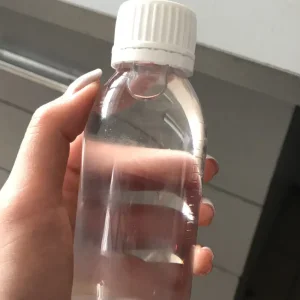
Bis(2-pyridylthio) zinc, chemically designated as Zinc Pyrithione (ZPT), represents one of the most structurally robust coordination complexes in modern industrial biocide and fine chemical synthesis. With the molecular formula C10H8N2O2S2Zn and a molecular weight of 317.70 g/mol, this coordination complex features a central zinc ion bonded to two pyrithione ligands through nitrogen and oxygen donor atoms. This unique chelation ring geometry yields exceptional biochemical stability, low aqueous solubility, and broad-spectrum antimicrobial activity against Gram-positive and Gram-negative bacteria, fungi, algae, and yeast strains.
In high-volume B2B manufacturing, controlling the particle size morphology, crystalline polymorphism, and ligand purity of Bis(2-pyridylthio) zinc is essential. Premium technical grades (typically ≥ 98.0% purity) are supplied as fine, off-white to pale yellow microcrystalline powders or specialized 48% aqueous dispersions. The compound's mode of action operates through membrane depolarization, cellular transport disruption, and trans-membrane copper transport acceleration, leading to irreversible loss of fungal intracellular ATP and fungal cell death.
| Parameter | Technical Grade Specification | Industrial Aqueous Dispersion (48%) |
|---|---|---|
| Chemical Name | Bis(2-pyridylthio) zinc / Zinc Pyrithione | Zinc Pyrithione Water-Based Suspension |
| CAS Registry Number | 13463-41-7 | 13463-41-7 |
| Active Content (Assay) | ≥ 98.0% (w/w) | 48.0% ± 1.5% (w/w) |
| Appearance | Fine Off-White to Light Yellow Powder | White to Off-White Smooth Viscous Liquid |
| pH Range (1% dispersion) | 6.5 – 8.5 | 6.5 – 9.0 |
| Particle Size (D50) | 1.5 – 3.0 μm (Micronized) | 0.8 – 1.8 μm |
| Heavy Metals (as Pb) | ≤ 10 ppm | ≤ 5 ppm |
The global industrial footprint of Bis(2-pyridylthio) zinc is undergoing a profound paradigm shift driven by shifting regulatory mandates, advanced functional coating innovations, and green chemistry initiatives across Europe, North America, and the Asia-Pacific region.
Historically recognized as the premier active constituent in anti-dandruff hair care formulations, regulatory updates in the European Union (EU Regulation 2021/1902 banning ZPT in cosmetics under Omnibus IV) have re-channeled global chemical supply chains. As cosmetic manufacturers transition to alternative scalp actives like Piroctone Olamine and Climbazole, global demand for Bis(2-pyridylthio) zinc has aggressively expanded into industrial antimicrobial materials, marine anti-fouling coatings, architectural paints, and polymer stabilization systems.
While personal care usage contracts in select Western jurisdictions, industrial procurement for Bis(2-pyridylthio) zinc is experiencing an unprecedented CAGR of 6.8%. Driven by high-durability requirements in marine vessel hull coatings, antimicrobial polyurethane foams, flexible PVC, and industrial water treatment systems, high-purity ZPT has solidified its role as a high-performance industrial biocide.
International B2B procurement managers sourcing chemical raw materials prioritize four foundational elements: purity consistency, regulatory compliance, global logistical security, and competitive total cost of ownership (TCO).
North American Market (USA & Canada): Sourcing is governed by strict EPA FIFRA registration protocols. Procurement managers focus heavily on low-dust dry powder grades and stabilized aqueous suspensions for use in architectural interior coatings, outdoor exterior latex paints, and industrial floor topcoats.
European Union & UK: Compliance with the Biocidal Products Regulation (BPR, Regulation EU No 528/2012) dominates purchasing decisions. Buyers seek accredited Chinese manufacturers capable of supplying full REACH registration documentation, continuous trace impurity auditing, and zero-decontaminant certifications for industrial film preservation (PT 6, PT 7, PT 9, and PT 10 applications).
Asia-Pacific & Latin America: Rapid urbanization and booming shipbuilding hubs in China, South Korea, Japan, and Brazil fuel substantial demand for marine-grade Bis(2-pyridylthio) zinc. Personal care applications also remain strong across South East Asia, India, and South America, where local cosmetic regulations fully permit ZPT anti-dandruff rinse-off treatments up to 1.0% active concentration.
As a premier chemical raw material manufacturer, JIMPOCHEM CO., LTD (established in 2010) represents the pinnacle of modern Chinese chemical industrial engineering. Situated in the specialized Chemical Industry Park of Jinan City, Shandong Province, our industrial footprint spans over 500 acres, backed by an experienced workforce and state-of-the-art automated synthesis complexes.
Our Industry 4.0 integrated production lines utilize continuous DCS (Distributed Control System) monitoring for 2-chloropyridine mercaptan oxidation and zinc ion chelation reactions. This precise automated control ensures batch-to-batch assay consistency (≥98.5%) and removes residual free heavy metal ions.
Direct integration with domestic raw material feedstocks—including 2-chloropyridine, sodium hydrosulfide, and high-purity zinc sulfate—insulates JIMPOCHEM from global market price fluctuations, guaranteeing structural pricing power and uninterrupted production continuity for our tier-1 global partners.
Aligned with national "Dual-Carbon" sustainability goals, our automated facility incorporates closed-loop wastewater recycling, VOC absorption catalytic incinerators, and zero-discharge waste residue processing, delivering eco-friendly raw materials certified under ISO 14001 environment management.
Bis(2-pyridylthio) zinc possesses unique physical-chemical attributes that enable seamless integration into diverse industrial matrices. Below is an engineering overview of primary industrial formulation scenarios:
In antifouling self-polishing copolymer (SPC) paints, Bis(2-pyridylthio) zinc acts as a potent, low-solubility biocide that leaches at controlled release rates to prevent algae attachment (*Enteromorpha*, *Ectocarpus*) and barnacle cyprid settlement. Formulators recommended dosage: 2.0% to 5.0% by total weight.
Thermoplastic polyurethane (TPU), polyvinyl chloride (PVC), and synthetic rubbers exposed to outdoor moisture are susceptible to fungal enzymatic degradation (*Aspergillus niger*, *Penicillium funiculosum*). Incorporating micronized ZPT powder into masterbatches provides internal microbicidal defense, preventing plasticizer degradation, surface discoloration, and mechanical brittleness. Recommended loading: 500 ppm to 2500 ppm active.
Water-borne acrylic paints applied in high-humidity climates require robust film preservatives. Bis(2-pyridylthio) zinc offers low volatility and strong resistance to UV degradation compared to pure organic biocides, preventing unsightly black mold colonization on exterior concrete and interior bathroom walls.
In markets complying with US FDA, Latin American ANVISA, or ASEAN cosmetic directives, ZPT remains an effective anti-dandruff agent. It effectively controls *Malassezia globosa* proliferation on scalp skin. Recommended inclusion: 0.5% – 1.0% rinse-off formulations.
At JIMPOCHEM, operational credibility and technical transparency form the backbone of our enterprise philosophy. Every batch of Bis(2-pyridylthio) zinc undergoes rigorous multi-stage analytical inspection in our centralized ISO/IEC 17025 accredited laboratory prior to domestic dispatch or global container shipping.
Every shipment is issued a comprehensive Certificate of Analysis (CoA), Safety Data Sheet (SDS) compliant with GHS Revision 9, and unique batch tracking numbers. Customers can trace raw material lot origin, reaction vessel synthesis logs, analytical spectral data, and logistics timestamps via our digital QA portal.
In addition to Bis(2-pyridylthio) zinc, JIMPOCHEM produces and exports a robust portfolio of organic fine chemicals, cosmetic active intermediates, and performance additives. Explore our full industrial line below:
Select specialized additives, biocides, and fine intermediates manufactured at our Jinan chemical production complex.
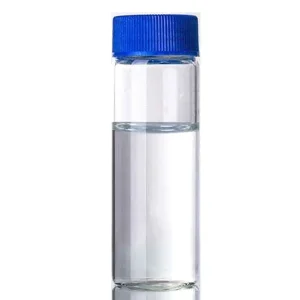
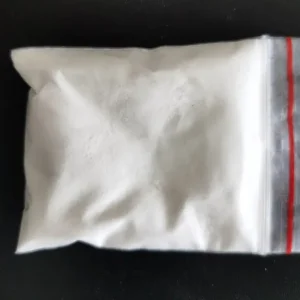
As a designated chemical service provider, JIMPOCHEM offers tailored "R&D - Production - Application - Service" solutions designed to optimize operational efficiency and product quality for industrial clients worldwide:
High-purity actives for cosmetics, makeup, fragrance, facial washes, body washes, toothpaste formulations, and specialty hygiene detergents.
Synthesis of Active Pharmaceutical Ingredients (APIs), excipients, intermediates, specialized reaction solvents, and synthesis catalysts.
Antimicrobial additives, mold inhibitors, thermal stabilizers, and anti-degradants for tires, seals, packaging films, and automotive components.
In-can preservatives, dry-film biocides, and dispersion agents for architectural paints, decorative coatings, and specialty industrial printing inks.
Preservatives, shelf-life extenders, organic acid salts, and nutritional fortification intermediates adhering to global safety benchmarks.
Ultra-pure electronic chemicals, semiconductor processing agents, printed circuit board (PCB) chemicals, and lithium battery electrolyte salts (LITFSI).
Discover our comprehensive chemical offering. Click on any product below to access detailed CAS datasheets, COAs, and direct manufacturer quotation channels:
CAS 25339-99-5 | Food & Cosmetic Grade Non-Ionic Emulsifier
CAS 19372-44-2 | PVC Heat Stabilizer & Catalyst
CAS 9002-93-1 | Non-ionic Surfactant & Triton X-100 Alternative
CAS 629-19-6 | Flavor & Fragrance Organic Intermediate
CAS 120-46-7 | Co-stabilizer for Rigid PVC Formulations
CAS 80584-91-4 | Water-soluble Corrosion Inhibitor
CAS 95-71-6 | Polymerization Inhibitor & Fine Intermediate
CAS 302776-68-7 | High-Performance UVA Sunscreen Filter
CAS 123-00-2 | Epoxy Curing Agent & Synthesis Reagent
CAS 88-04-0 | Broad-Spectrum Antiseptic & Disinfectant
CAS 3228-02-2 / 39660-61-2 | Mild Anti-acne Active
CAS 14306-25-3 | Natural Chelating Agent & Antioxidant Booster
CAS 629-59-4 | High-Purity Phase Change Material & Solvents
CAS 90076-65-6 | High-Conductivity Battery Electrolyte Salt
CAS 81025-04-9 | Specialty Polyol & Pharmaceutical Excipient
CAS 72-17-3 | Humectant & pH Regulator for Cosmetics
CAS 9000-71-9 | Industrial Protein & Binder Polymer
CAS 577-11-7 | Fast Wetting Agent & Surfactant
CAS 77-86-1 | Biological Buffer & API Synthesis Buffer
CAS 70-18-8 | Pharmaceutical & Cosmetic Antioxidant
CAS 13463-41-7 | Antimicrobial Biocide & Industrial Fungicide
CAS 2050-87-5 | Garlic-Derived Bioactive Antimicrobial
CAS 28211-04-3 | Natural Bio-preservative for Foods & Cosmetics
CAS 13197-76-7 | High-Foam Amphoteric Surfactant
CAS 101-96-2 | Rubber Antioxidant & Fuel Additive
CAS 3458-28-4 | Pharmaceutical Grade Natural Sugar Active
CAS 1984-06-1 | Biological Processing & Elution Agent
CAS 643-79-8 | High-Level Medical Disinfectant Active
CAS 187393-00-6 | Broad-Spectrum Photostable UV Filter
Expert insights covering technical compatibility, regulatory compliance, chemical stability, and global procurement procedures for Bis(2-pyridylthio) zinc.
 JIMPOCHEM