2026 Best Soda Lime Suppliers for Global Buyers?

Time:2026-09-15 Author:Madeline
0%

Choosing the best Soda Lime supplier in 2026 requires more than comparing prices on a spreadsheet. Global buyers need dependable quality, clear documentation, and practical delivery support. Soda Lime is widely used in medical breathing systems, laboratory equipment, diving applications, and industrial gas treatment. Each use demands careful attention to granule size, carbon dioxide absorption capacity, dust control, and packaging stability.

A reliable supplier should provide recent test reports, safety data sheets, batch traceability, and consistent technical specifications. Buyers should also check production experience, export records, and responses to quality complaints. A factory may offer attractive pricing, yet weak moisture protection can damage the product during ocean transport. Strong packaging matters. Sealed bags, lined cartons, and dry warehouse conditions can protect performance before arrival.

This guide reviews leading Soda Lime suppliers for international purchasing teams. It considers product quality, certifications, manufacturing capability, delivery flexibility, and communication standards. Supplier rankings are not permanent. Market conditions change, and a company with excellent service today may struggle during a raw-material shortage. That limitation deserves attention. Buyers should request current samples and confirm specifications before signing contracts. A short video audit can reveal storage details that brochures omit. Still, no checklist replaces careful testing in the buyer’s own application. Small differences in airflow, humidity, and equipment design can affect results. The strongest supplier is not always the largest one. It is the partner that documents performance, explains limitations honestly, and delivers consistently across borders.
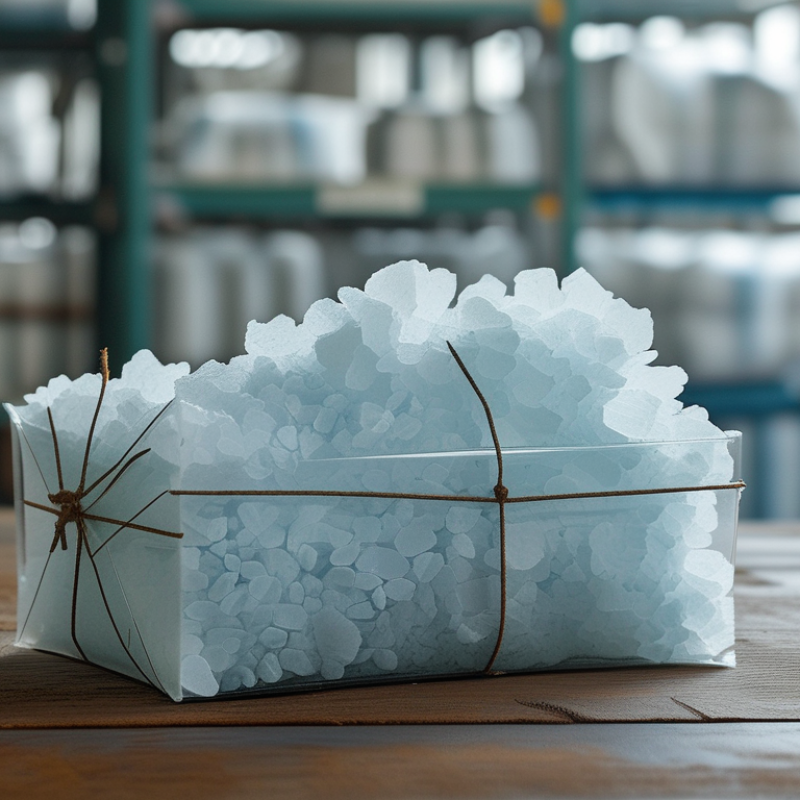
2026 Best Soda Lime Suppliers for Global Buyers?

What Is Soda Lime and Where Is It Used?

Soda lime is a granular carbon dioxide absorbent, not ordinary household lime. It usually contains calcium hydroxide, with smaller amounts of sodium or potassium hydroxide. Silica helps maintain the granule structure. Indicator dyes may show when the material is exhausted. The granules react with carbon dioxide and produce heat, so ventilation and careful handling matter.

Its best-known use is in closed breathing systems. Medical anesthesia machines and respiratory research equipment use soda lime to remove exhaled carbon dioxide. It also supports controlled-atmosphere chambers, diving equipment, animal-care systems, and selected industrial gas processes. In a working circuit, the granules should allow steady airflow without excessive dust. Uneven packing can create channels, leaving carbon dioxide untreated.

Global buyers should inspect particle size, moisture limits, dust levels, packaging strength, and batch traceability. A reliable supplier should provide a current safety data sheet, technical specifications, storage guidance, and clear replacement instructions. Color change helps, but it is not perfect. Heat, moisture, and prolonged storage can affect the indicator. Practical users often confirm performance with equipment readings instead of trusting color alone. That extra check may seem slow, yet it prevents a quiet failure. Storage should remain sealed and dry, away from acids and incompatible materials. I have seen specifications look similar on paper, while granule consistency differs noticeably during operation. That detail deserves more attention.

How to Evaluate Soda Lime Suppliers in 2026

In 2026, evaluating soda lime suppliers requires more than comparing price per container. Start with traceability. Ask for the latest certificate of analysis, safety data sheet, batch number, and production date. Confirm calcium hydroxide content, moisture range, dust control, and carbon dioxide absorption capacity. These details affect absorber performance during anesthesia.

ISO 80601-2-13 addresses essential safety requirements for anesthesia workstations. A reliable supplier should explain how its soda lime supports these requirements. The 2024 Grand View Research medical gas market analysis projects strong growth through 2030, increasing pressure on supply consistency. However, market growth does not prove product quality. I have seen purchasing teams overlook packaging integrity. A damaged seal can quietly reduce shelf life.

Tips:

Compare tested capacity, not only kilogram price. Request samples from different batches. Check color indicators under controlled conditions. Review shipment temperature and humidity records. Keep emergency stock, but avoid excessive storage. Supplier audits should include calibration records, complaint handling, and recall procedures. A low-cost offer may become expensive after inconsistent granule size causes premature replacement. Require clear evidence before approving a long-term contract.

Which Supplier Regions Serve Global Buyers Best?

For global soda lime buyers, supplier region affects more than the quoted price. It shapes lead times, documentation quality, packaging standards, and technical support. Europe often serves buyers needing detailed safety data, consistent batch records, and strong quality systems. These suppliers may suit laboratories and medical distributors with strict purchasing procedures. Freight costs can still be high.

East Asian production centers often provide broad capacity, flexible packaging, and competitive pricing. They can support container-scale orders and private specifications. Buyers should inspect moisture barriers, pallet protection, and container loading practices. Soda lime performance can decline when packaging absorbs humidity. Ports matter. A low factory price may lose value after delays, inspections, or damaged cartons.

North American suppliers may be attractive for regional distribution, shorter inland delivery, and responsive technical communication. Middle Eastern and South Asian suppliers can offer useful access to nearby markets, especially when regional warehousing is available. However, availability and consistency can vary between facilities. That assumption fails. A supplier’s region is only a starting point. Ask for recent certificates of analysis, production dates, particle-size data, and shelf-life conditions. Compare delivered cost, not only the unit quotation. Check whether support continues after shipment. Small details often expose larger risks. Some buyers overvalue capacity and undervalue traceability. That is a mistake worth revisiting. Reliable sourcing depends on verified processes, realistic transit plans, and clear responsibility when specifications are missed.

What Certifications and Quality Standards Should Buyers Check?

When evaluating soda lime suppliers in 2026, global buyers should examine certifications and product evidence together. ISO 9001 indicates a structured quality management system, but it does not prove every batch performs well. For medical applications, ISO 13485 may be relevant when the supplier supports device-related production. Buyers should confirm the certificate’s scope, validity, and issuing body.

Ask for a current certificate of analysis for each production lot. It should show calcium hydroxide content, alkali composition, moisture, particle size, color, and carbon dioxide absorption capacity. Dust level matters too, especially in clinical rooms and enclosed equipment. An independent laboratory accredited to ISO/IEC 17025 can strengthen test reliability. A certificate alone is not proof.

Check safety data sheets, transport classifications, packaging integrity, and lot traceability before placing large orders. Regional chemical rules may also require registration, labeling, or substance documentation. Request retention samples and compare them with delivered material. Small differences can affect indicator color changes and service life. That detail is easy to miss.

Suppliers should explain storage conditions, shelf life, sealing methods, and complaint handling. Audit records are useful, but recent production samples are more convincing. Buyers sometimes overvalue paperwork and undercheck performance. I would not skip a small trial order, even when the documents look complete. That caution may cost time, but it can prevent expensive quality disputes.

2026 Soda Lime Supplier Due-Diligence Checklist

The chart uses a practical buyer-priority score from 1 to 5, rather than supplier market-share data. Buyers should request current, product-specific evidence before approval.

Key checks include an ISO 9001 quality-management certificate, ISO 17025 laboratory competence for test results, ISO 13485 when the product is used in medical-device applications, GMP controls for pharmaceutical or clinical use, and EU REACH/CLP documentation where applicable. Each shipment should also be supported by a Certificate of Analysis, Safety Data Sheet, lot traceability, particle-size data, moisture content, chemical composition, and carbon-dioxide absorption performance.

How to Compare Prices, Logistics, and Long-Term Supply Terms?

2026 Best Soda Lime Suppliers for Global Buyers?

Price comparisons should begin with specification, not the lowest quotation. Soda lime may differ in particle size, moisture, dust level, color indicator, and carbon dioxide absorption capacity. Ask suppliers for recent certificates of analysis and batch results. A lower price can hide shorter shelf life or higher consumption. The USGS Mineral Commodity Summaries 2025 provides useful trends for lime and soda ash inputs, although it does not publish direct soda lime contract prices.

Compare delivered cost under the same Incoterm, package size, and destination. Include inland transport, port charges, insurance, duties, and possible demurrage. UNCTAD’s Review of Maritime Transport 2024 notes that over 80% of global merchandise trade by volume moves by sea. Port reliability therefore matters. The World Bank Logistics Performance Index 2023 evaluates customs, infrastructure, shipment arrangements, logistics competence, tracking, and timeliness. These factors can explain why two similar offers arrive at different real costs.

Long-term agreements need practical protection. Request monthly capacity, safety-stock rules, lead-time commitments, and written procedures for delayed shipments. Add price-adjustment formulas linked to documented input costs, rather than vague annual revisions. Consider dual sourcing for critical applications, but qualify the second source before an emergency. I have seen buyers focus too heavily on unit price. That is an expensive habit. Forecasts can also be wrong, so flexible volume bands and quarterly reviews deserve attention. Supplier audits should examine storage conditions, sealed packaging, traceability, and complaint response times.、】【

2026 Best Soda Lime Suppliers for Global Buyers? - How to Compare Prices, Logistics, and Long-Term Supply Terms?
Supplier Category Typical Product Grade Typical Composition Indicative 2026 Price Range
(USD/MT)
Common Packaging Typical Order Size Estimated Lead Time Common Incoterms Typical Payment Terms Quality and Documentation Long-Term Supply Suitability
Large-scale industrial producer Industrial soda lime for gas purification and carbon dioxide absorption Calcium hydroxide typically 70–80%; sodium hydroxide and/or potassium hydroxide typically 2–5%; controlled moisture content 220–420 25 kg multi-wall bags; 500–1,000 kg jumbo bags; palletized export loads 1–5 MT for trial orders; 20–24 MT for full-container shipments 2–6 weeks, depending on production schedule and destination FOB, CFR, CIF, FCA 30% deposit and 70% before shipment; or letter of credit for established transactions Certificate of Analysis, Safety Data Sheet, specification sheet, batch traceability, moisture and particle-size data High
Best for recurring industrial demand and annual contracts
Regional chemical manufacturer General-purpose laboratory and industrial grade Calcium hydroxide-based formulation with alkaline activators and an optional color indicator 300–600 5 kg, 10 kg, or 25 kg sealed bags; fiber drums or plastic-lined cartons 500 kg–5 MT 1–4 weeks for standard specifications EXW, FCA, FOB, CIF Advance payment for first order; 30–60 days may be available after credit approval Batch COA, SDS, product specification, country-of-origin documents, basic conformity declaration Medium–High
Suitable for buyers needing flexibility and shorter regional transit
Specialty laboratory-grade producer High-purity soda lime for analytical instruments and controlled laboratory use Controlled alkalinity, low dust, consistent granulation, low metallic impurities, optional moisture indicator 700–1,600 0.5 kg–5 kg moisture-resistant containers; secondary cartons with lot identification 50–500 kg 2–8 weeks EXW, CPT, CIP, DAP Prepayment or payment against shipping documents; credit terms usually require an approved account Detailed COA, SDS, lot traceability, particle-size distribution, impurity profile, packaging and shelf-life information High for laboratories
Recommended when consistency is more important than lowest price
Medical and anesthesia absorbent producer Medical-grade soda lime for respiratory gas absorption Calcium hydroxide-based absorbent with controlled sodium/potassium hydroxide levels, low dust, and validated color-change behavior 900–2,000 Sealed 1–5 kg containers; tamper-evident cartons; moisture-barrier secondary packaging 100 kg–2 MT 4–10 weeks, including quality release procedures FCA, CPT, CIP, DAP Advance payment for new buyers; negotiated credit terms for qualified distributors COA, SDS, lot release records, shelf-life statement, packaging validation, applicable medical-quality documentation High
Best for regulated applications requiring stable quality and traceability
Distributor with regional inventory Standard industrial or laboratory grade sourced from qualified manufacturers Specification depends on the original manufacturer; buyers should verify composition and lot consistency 450–1,000 Original manufacturer packaging or distributor-repacked cartons and drums 25 kg–2 MT 3–15 business days when stock is available; 4–8 weeks for replenishment EXW, FCA, DAP, local-delivery terms Prepayment, net 30, or account-based terms depending on market and credit review COA and SDS should be supplied for each batch; verify original lot number and repacking controls Medium
Useful for urgent or low-volume purchases, but usually at a higher unit cost
Export trading supplier Containerized standard-grade soda lime for international buyers Usually calcium hydroxide-based; exact formulation, indicator type, and granulation vary by source factory 260–550 25 kg bags or 500–1,000 kg jumbo bags; container loading commonly optimized by pallet weight 5–25 MT 4–10 weeks, including consolidation and export documentation FOB, CFR, CIF, DAP 20–30% deposit and balance before shipment; irrevocable letter of credit may be negotiated Require pre-shipment COA, SDS, packing list, certificate of origin, photos of loading, and independent inspection if needed Medium–High
Competitive for container quantities when supplier verification is completed
Custom-formulation supplier Customized granule size, indicator color, alkalinity, dust level, or packaging format Formulation and particle-size distribution adjusted to the buyer’s process or equipment requirements 600–1,500 Custom moisture-barrier bags, drums, cartridges, or private-label neutral packaging 1–10 MT after qualification; smaller pilot batches may carry development charges 6–14 weeks for qualification; 3–8 weeks for repeat orders FCA, FOB, CIF, DAP Development payment or deposit for initial qualification; contract pricing for repeat orders Approved specification, retained samples, change-control procedure, batch COA, stability or shelf-life data where applicable High after approval
Appropriate for OEMs and buyers with a defined technical specification
Price ranges are indicative planning benchmarks for 2026 and are not firm quotations. Actual pricing depends on grade, alkalinity, granule size, packaging, order volume, destination, freight rates, duties, inspection requirements, and payment terms. Buyers should request a current quotation and a batch-specific Certificate of Analysis before placing an order.

FAQS

What is soda lime?

Soda lime is a granular carbon dioxide absorbent, not ordinary household lime. It usually contains calcium hydroxide and small amounts of alkaline hydroxides. Silica helps hold the granules together. It can heat during use.

Where is soda lime used?

It removes exhaled carbon dioxide in closed breathing systems. Common settings include medical equipment, respiratory research, diving equipment, animal-care systems, and controlled-atmosphere chambers. Industrial gas processes may use it too.

How does poor packing affect performance?

Uneven granules can create airflow channels. Carbon dioxide may pass through untreated. Pack the absorber evenly, while avoiding excessive dust. Quiet failures happen.

Which product details should buyers check?

Check particle size, moisture limits, dust levels, packaging strength, batch traceability, and absorption capacity. Request a current safety data sheet and technical specifications. Ask for replacement instructions.

Can the color indicator be trusted alone?

No. Heat, moisture, and long storage can affect the indicator. Confirm performance using equipment readings whenever possible. Color helps, but it is imperfect.

How should soda lime be stored?

Keep the container sealed and dry. Store it away from acids and incompatible materials. Inspect seals, cartons, and production dates before use. A damaged seal matters.

How can buyers evaluate suppliers in 2026?

Compare tested capacity, not only price per kilogram. Request certificates of analysis, batch numbers, production dates, and samples from different batches. Review calibration records, complaints, recalls, and shipment humidity records. Cheap can become expensive.

Does supplier region determine product quality?

No. Region affects lead time, freight, documentation, packaging, and technical support. Compare delivered cost, not the factory quotation alone. Verify recent certificates and particle-size data. Capacity is not traceability.

Conclusion

Soda Lime is a specialized absorbent material widely used in medical breathing systems, laboratory applications, chemical processing, and other controlled gas-management environments. This guide explains how global buyers can assess suppliers in 2026 by examining product consistency, absorption performance, particle size, packaging, production capacity, technical support, and export experience. It also compares major supply regions according to manufacturing reliability, shipping access, lead times, and responsiveness to international orders.

Buyers should verify relevant quality certifications, documented testing procedures, safety data, traceability systems, and compliance with applicable destination-market requirements. A complete purchasing evaluation should include more than the quoted unit price: freight costs, packaging options, customs documentation, payment terms, minimum order quantities, inventory policies, and long-term supply stability are equally important. By using a structured comparison process, importers and distributors can select dependable Soda Lime suppliers, reduce procurement risks, and establish supply agreements that support consistent quality and predictable delivery.

Madeline

Madeline

Madeline is a dedicated marketing professional with a wealth of expertise in our company's core offerings. With a keen understanding of the industry, she brings a unique perspective to her role, consistently delivering high-quality content that highlights the superior aspects of our products. As......